Ukraine's reliance on Starlink exposes limits of Europe's satellite alternatives
A disruption to Ukraine's satellite internet has intensified Europe's push for alternatives, but existing networks cannot fully meet Kyiv's battlefield needs.
By Public Column Staff ·
A sudden slowdown in Starlink services in Ukraine last week disrupted the country's ability to defend against Russian attacks, underscoring its dependence on a satellite network it does not control. Service has since been restored, but the episode has added urgency to European efforts to develop reliable alternatives for military communications.
Elon Musk said on Saturday that Ukraine had breached Starlink's terms by using the service for lethal drone strikes. He said a loophole had been closed the previous week and warned that violations could lead to service being withdrawn. Responsibility for authorising the restrictions remains unclear, amid conflicting accounts involving Musk, Donald Trump and the Pentagon. The disruption comes as relations between Kyiv and Washington continue to deteriorate.
SpaceX owns both Starlink, which Ukraine uses for battlefield communications, and Starshield, a service designed for military use that is controlled by the US government. Ukraine uses Starshield for operations including drone warfare. Fast connections allow troops to exchange commands and respond to attacks with minimal delay. Soldiers speaking anonymously to the BBC described reliable connectivity as essential to survival, with even a second or two potentially affecting battlefield outcomes.
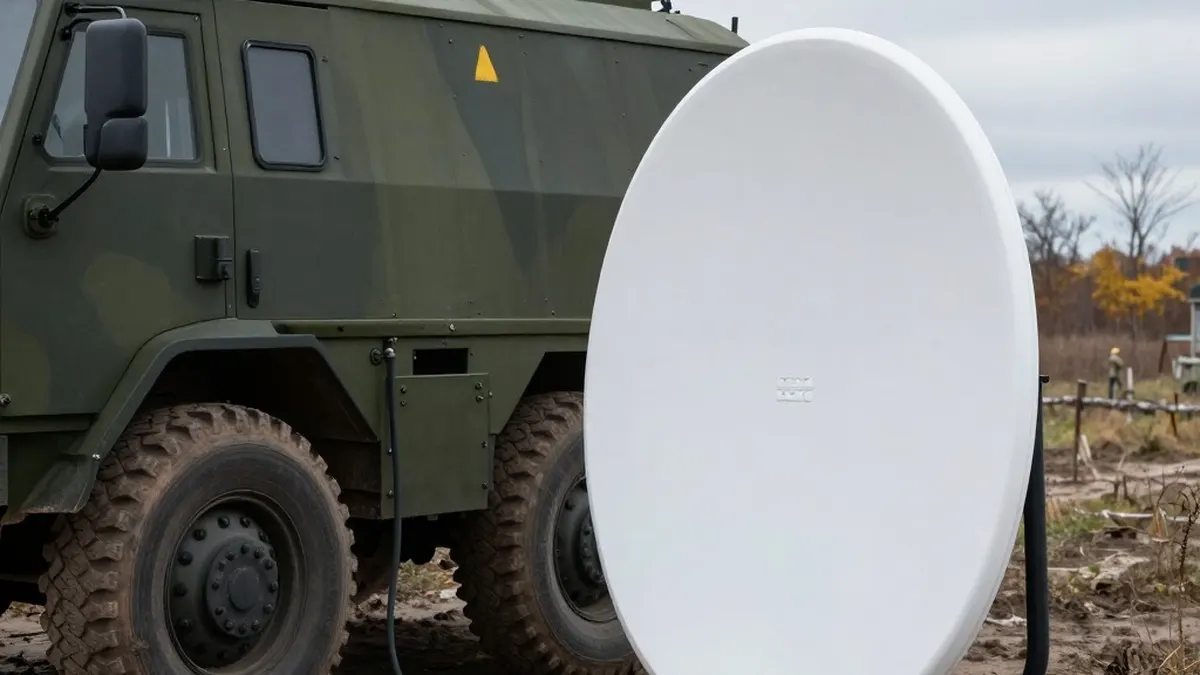
France's Eutelsat operates OneWeb, the principal alternative, but its roughly 600 active satellites compare with more than 10,000 in Starlink's constellation. Equipment also presents obstacles. Former Eutelsat chief executive Eva Berneke said its terminals are somewhat larger than Starlink's and cost about five times as much. They can be mounted on cars or tanks, but may be unsuitable for small drones.
The most immediate European option is Govsatcom, a programme established in January to share existing satellite resources among EU member states. The European Commission is discussing Ukrainian participation with Kyiv, although no timetable has been announced. Its current capabilities do not support warfare operations such as piloting drones. The Commission hopes commercial providers, including OneWeb, will join by early next year, potentially meeting some of Ukraine's military connectivity requirements.
A more substantial European network, Iris², is scheduled to begin operating in 2029, with Ukraine guaranteed access from its launch. Intended primarily for government, military and emergency users, it is being developed by the SpaceRISE consortium, led by Eutelsat, SES and Hispasat. Its planned 348 satellites will operate in low and medium Earth orbit. Kari Bingen, who directs the Aerospace Security Project at CSIS, said broader coverage from individual satellites means a smaller constellation should not automatically be considered a weakness.
Even with Iris², experts argue that Ukraine would benefit from maintaining access to several networks. Bingen said alternative connections help preserve communications when one system fails. Vincent Tourret, a researcher at the French Institute of International Relations, said a backup would be useful if Starlink stopped operating, but currently available alternatives would not adequately support strikes or interceptions.
Other European initiatives remain at an early stage. Nokia and ICEYE announced this week that they would explore satellite communications for Ukraine's military defences. Airbus, Leonardo and Thales are also pursuing a joint venture called Project Bromo as a potential SpaceX competitor. Berneke cautioned that developing, building and launching enough satellites for comprehensive coverage requires substantial funding and many years.
Source: BBC News