Tesla Delays Unsupervised Driving, Confines Capability to Robotaxi Zones
The company sets a new timeline for autonomous features in customer vehicles, restricting their use to specific operational areas.
By Malcolm Davis ·
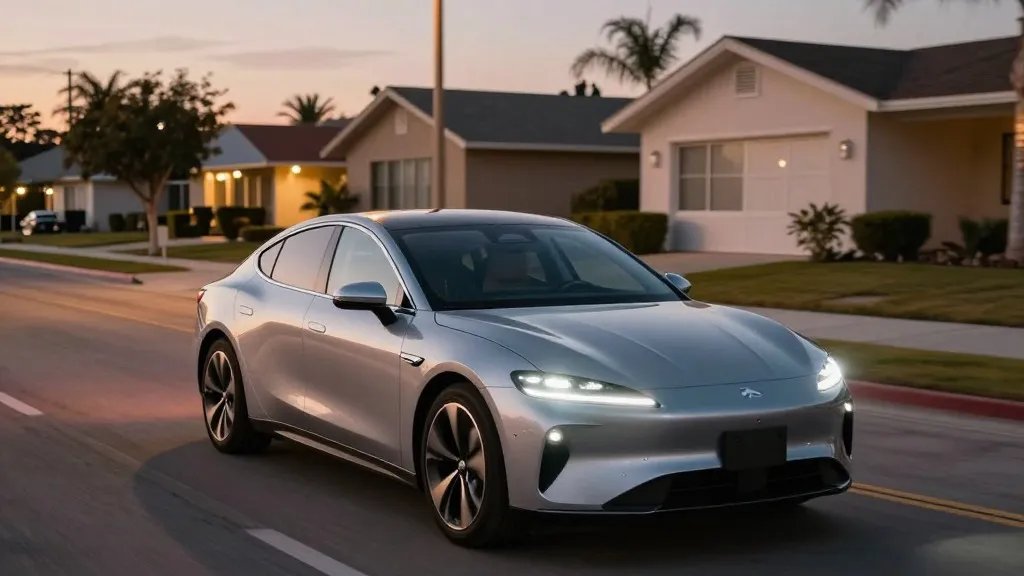
Tesla has pushed back the arrival of unsupervised driving for vehicles owned by customers, now targeting the second quarter of 2027. This schedule update emerged during the company's third-quarter earnings call. Ashok Elluswamy, Tesla's AI chief, delivered the timeline regarding when owners could expect to enable these capabilities in their own cars.
Elluswamy's response clarified that the feature will not function as a general-purpose autonomous driver for personal trips. Instead, the rollout involves owners enrolling their vehicles into Tesla's managed Robotaxi network. Under this framework, Tesla retains control over the operation of the service. Consequently, a customer's vehicle would only drive itself without supervision inside regions where the Robotaxi service is currently active.
The operational areas for this service are currently limited. Tesla's Robotaxi network functions in six metropolitan areas across the United States. In locations like Miami, the mapped zone includes only specific sections, such as West Miami and areas toward Doral and Sweetwater. Similar narrow boundaries apply to the service areas in Orlando and Tampa.
Within these designated zones, the service operates under specific constraints. The vehicles maintain low speeds, generally avoid highways, and steer clear of more difficult driving environments. Additionally, the California market presents a unique hurdle. In the Bay Area, vehicles remain supervised because state regulations require a safety driver unless the company releases certain data to the California DMV, which Tesla has chosen not to do beyond level 2 systems.
The size of the fleet remains limited as well. By the conclusion of the third quarter, Tesla reported the Robotaxi service had accumulated nearly 2 million cumulative unsupervised miles. This figure followed the addition of the Cybercab to the Austin fleet. Despite these miles, third-party tracking from earlier this year indicated the count of fully driverless Teslas on public roads remained in the dozens, far below figures previously discussed by Elon Musk.
This timeline represents another shift in the promise made to customers. For years, the company has marketed Full Self-Driving software with the expectation that a vehicle would eventually drive itself to any destination via a software update. In July 2025, Musk indicated that unsupervised use would be available by the end of that year for certain geographies. Owners of vehicles equipped with HW3 computers have already been informed that their hardware cannot support unsupervised FSD.
The upcoming capability for Q2 2027 narrows the scope of what is being offered. Rather than a vehicle providing transportation anywhere the owner desires, the car can only function as a Robotaxi within the specific boundaries Tesla controls. This restricts unsupervised operation to low-speed routes within small geofences, rather than highway travel or cross-town trips.
During the call, Elluswamy reiterated that safety concerns remain the primary bottleneck for expanding autonomous capabilities. He explained that these issues are why the service limits itself to low-speed roads and avoids difficult environments. While he estimated these safety issues could be resolved by next year, no specific date for that resolution was provided.
Source: Electrek