Tesla Q3: Margin Recovery Masks Deepening Profit Erosion
While gross margins improved, Tesla's operating income halved due to surging AI and R&D spending, complicating its capital expenditure outlook.
By Camila Rodriguez ·
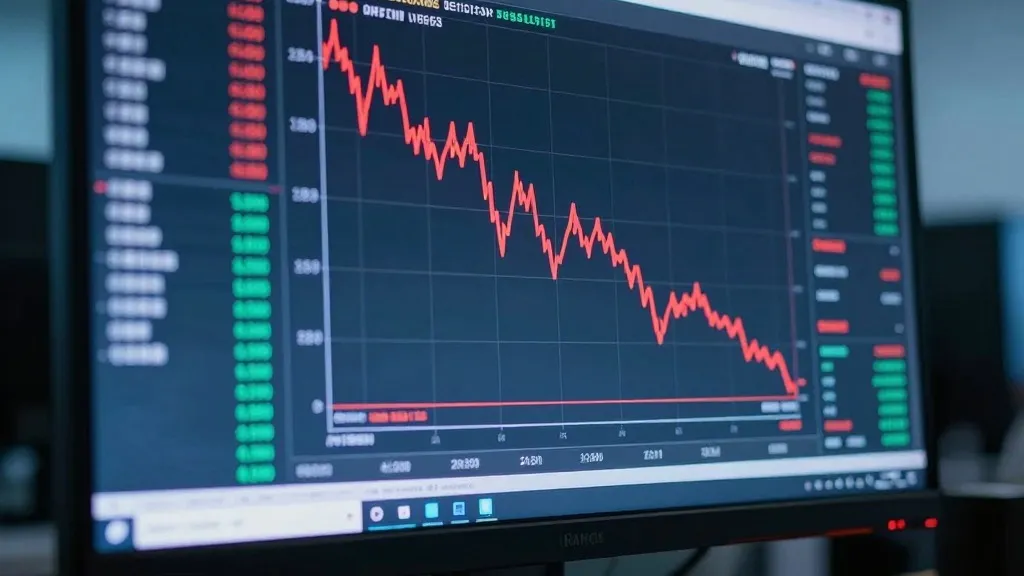
Tesla’s third-quarter financial report, released after the close on Tuesday, reveals a complex picture for investors. The company posted $28.05 billion in revenue, matching Wall Street’s consensus of $28.06 billion. However, the bottom line remains under pressure. Non-GAAP earnings per share came in at $0.48, slightly beating the expected $0.45, yet still representing a 4% decline from the previous year. The core issue is not demand, but the widening gap between revenue growth and operational costs.
The most significant development is the divergence between gross and operating margins. Automotive gross margin, excluding regulatory credits, recovered to 18.1%, up from 16.3% in the second quarter. Despite this improvement, operating income plunged 56% year-over-year to $718 million, resulting in a 2.6% operating margin. This contraction was driven by a 39% surge in operating expenses to $4.78 billion. Research and development costs alone jumped 69% to $2.76 billion, fueled by investments in the company’s 'Super Intelligence,' the Optimus robot, and the Cybercab.
Capital allocation remains a point of contention. Tesla spent $4.73 billion on capital expenditures in the quarter, more than double the figure from a year ago. Through the first nine months of 2026, total capex stands at $13.01 billion, roughly half of management's guidance for 'more than $25 billion' for the full year. To meet that target, the company would need to spend approximately $12 billion in the fourth quarter alone, a figure that exceeds its largest previous quarterly outlay. This discrepancy suggests the annual spending plan may be shifting into 2027, or that fourth-quarter spending will accelerate sharply.
Segment performance was mixed. The energy division saw revenue fall 16% to $2.88 billion due to tariff-related refunds, even as deployments increased. Conversely, the services and other segment, which includes charging and insurance, posted a record gross profit of $734 million on a 33% revenue increase. Tesla attributes flat vehicle sales primarily to battery availability constraints, claiming the largest passenger vehicle backlog in four years. However, average selling prices continued to decline, a trend unusual for a supply-constrained automaker.
On the balance sheet, Tesla ended the quarter with $45.4 billion in cash and investments. GAAP net income fell 43% to $787 million, influenced by a $288 million unrealized gain on bitcoin holdings, which was partly offset by a $142 million loss on its SpaceX investment. The company also reported 1.74 million active FSD subscriptions, a 67% increase, though this metric includes upfront purchases as defined in the CEO's compensation package. Robotaxi operations reached nearly 2 million cumulative unsupervised miles by the quarter's end.
The earnings call with management is scheduled for 5:30 p.m. ET, where executives are expected to address the capex trajectory and the sustainability of current margin levels. Shareholders will likely focus on whether the aggressive spending on AI and robotics will yield returns or continue to dilute near-term profitability.
Source: Electrek